A torque-speed curve shows whether a servo motor can produce the required torque at a particular speed. But most machine axes do not operate continuously at one torque and speed.
A typical motion cycle may look like this:
Accelerate → Constant Speed → Decelerate → Stop → Repeat
Each part of the cycle places a different torque demand on the motor. Checking individual operating points on the torque-speed curve is therefore only part of the sizing process.
That is where RMS (root mean square) torque becomes important.
This article explains RMS torque for servo motor sizing: what it means, how to calculate it, and how to evaluate torque demand across the full motion cycle. In SANYO DENKI terminology, RMS torque is referred to as effective torque.
1. What Does RMS Torque Tell You?
RMS torque represents the changing torque demands across a complete repeating motion cycle as a single value.
It helps answer a different question from the torque-speed curve:
- Torque-speed curve: Can the motor provide the required torque at the required speed?
- RMS torque: Is the torque demand across the complete repeating cycle appropriate for the motor’s rated capability?
A motor may have enough peak torque for acceleration but still be improperly sized if high torque is required too frequently or for too much of the cycle.
2. Start With the Motion Profile
Before calculating RMS torque, define one complete machine cycle.
For a typical positioning axis, this may include:
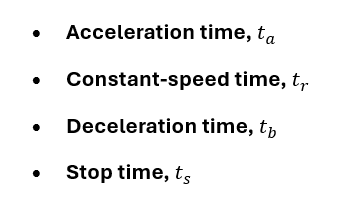
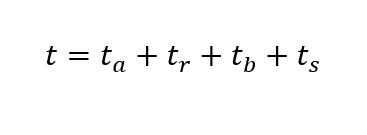
The total cycle time is:
Torque changes throughout this cycle.
During acceleration, the motor must provide the torque required to accelerate the load and overcome load torque.
At constant speed, acceleration torque is no longer required.
During deceleration, the torque changes again as the motor reduces the speed of the moving system.
RMS torque combines these different torque levels with the amount of time spent at each level.
3. Calculating RMS Torque
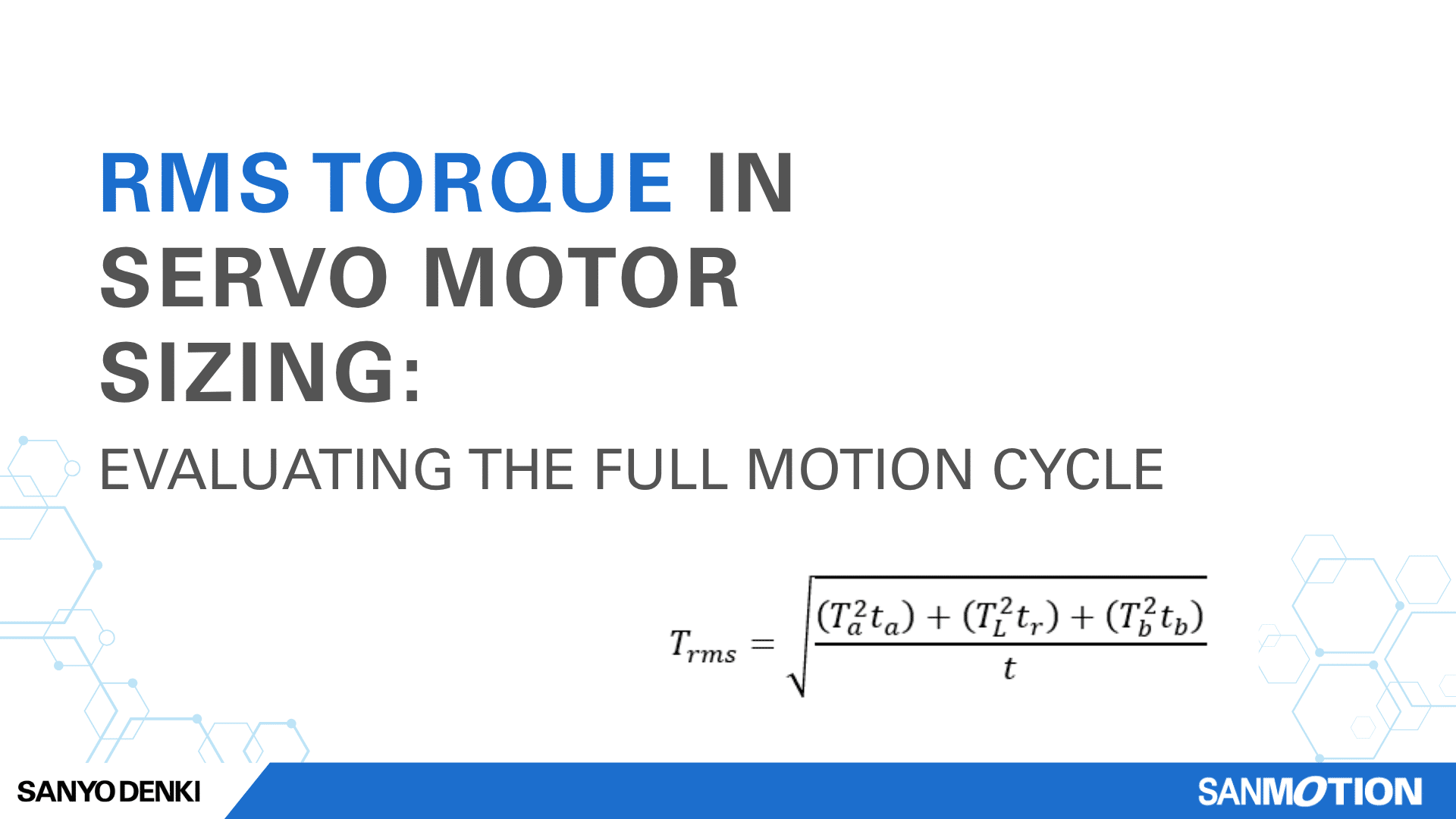
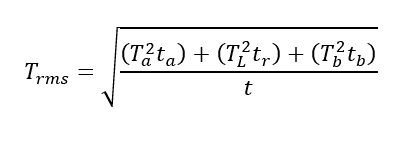
For the motion profile shown in the SANMOTION servo motor selection guide, effective torque is calculated as:
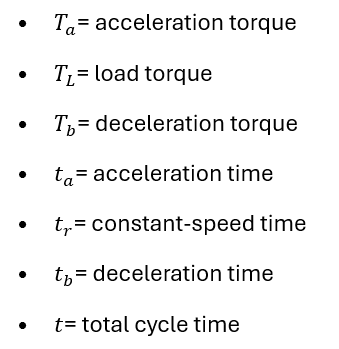
Where:
The important point is that RMS torque is not a simple average of the torque values.
Because torque is squared in the calculation, short periods of high torque can have a significant effect on the result. Acceleration and deceleration torque also do not cancel simply because they may act in opposite directions.
4. RMS Torque vs. Peak Torque
RMS torque does not replace the peak-torque check.
SANYO DENKI’s servo selection procedure evaluates them separately.
Peak Torque | RMS Torque | |
Evaluates | Highest short-duration torque requirement | Torque demand across the full cycle |
Typical concern | Acceleration or deceleration | Repeated operation |
Compared with | Peak torque capability | Rated torque |
This creates an important sizing distinction:
A motor can satisfy the peak-torque requirement and still have an RMS torque that is too high.
The opposite can also occur. The RMS value may be acceptable while an individual torque-speed operating point exceeds the motor’s available torque.
Both checks are required.
5. Use RMS Torque Together With the Torque-Speed Curve
RMS torque reduces a complete cycle to one useful value, but it does not show where each torque demand occurs on the motor’s torque-speed curve.
For example, an axis may require high acceleration torque while the motor is already running at high speed. Even if the calculated RMS torque is acceptable, the required torque must still be available at that speed.
A practical servo motor evaluation therefore considers:
- Required torque at required speed
Check the operating points against the motor’s torque-speed curve, as explained in How to Read a Servo Motor Torque-Speed Curve. - Peak acceleration and deceleration torque
Confirm that short-duration torque remains within the motor’s allowable capability. - RMS torque
Evaluate the complete repeating cycle against the motor’s rated torque. - Load inertia
Confirm that the selected motor can appropriately accelerate and decelerate the mechanism.
6. Cycle Time Matters
Two applications can require the same peak torque but place very different demands on the motor.
For example, one machine may require high torque briefly and then remain at low torque or stopped for much of the cycle. Another may repeat the same high-torque move almost continuously.
The peak torque may be identical, but the RMS torque will be higher in the second application.
The same issue appears when machine cycle time is reduced. Increasing the frequency of acceleration and deceleration while reducing dwell time can raise RMS torque even if the maximum torque does not change.
This is why servo motor sizing should be based on the complete operating cycle, not only the highest calculated torque.
7. Keep Appropriate Torque Margin
SANYO DENKI’s SANMOTION G motor selection procedure uses an assessment criterion of:
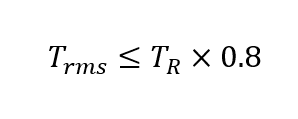
where TR is rated torque.
The guide also applies margin when evaluating acceleration and deceleration torque.
These values are SANYO DENKI selection criteria for SANMOTION G, not a universal rule for every servo system. Actual motor selection should consider the complete mechanism, motion profile, inertia, operating environment, regenerative requirements, and the specifications of the selected motor and amplifier.

Looking Beyond a Single Operating Point
A torque-speed curve is essential for determining whether a servo motor can provide the required torque at a given speed. RMS torque adds another part of the sizing picture by evaluating how torque changes throughout the entire repeating cycle.
The distinction is simple:
Torque-speed curve: Can the motor deliver the required torque at the required speed?
RMS torque: Can the selected motor appropriately handle the torque demand of the complete repeating cycle?
Using both gives a more complete basis for servo motor selection.
This article is part of SANYO DENKI AMERICA’s motion control engineering knowledge base, sharing practical insights used in real-world servo and motion control applications.
Request A Consultation
Request a consultation for your customization needs. Our team will be in contact with you soon to provide further information and answer any questions you may have.